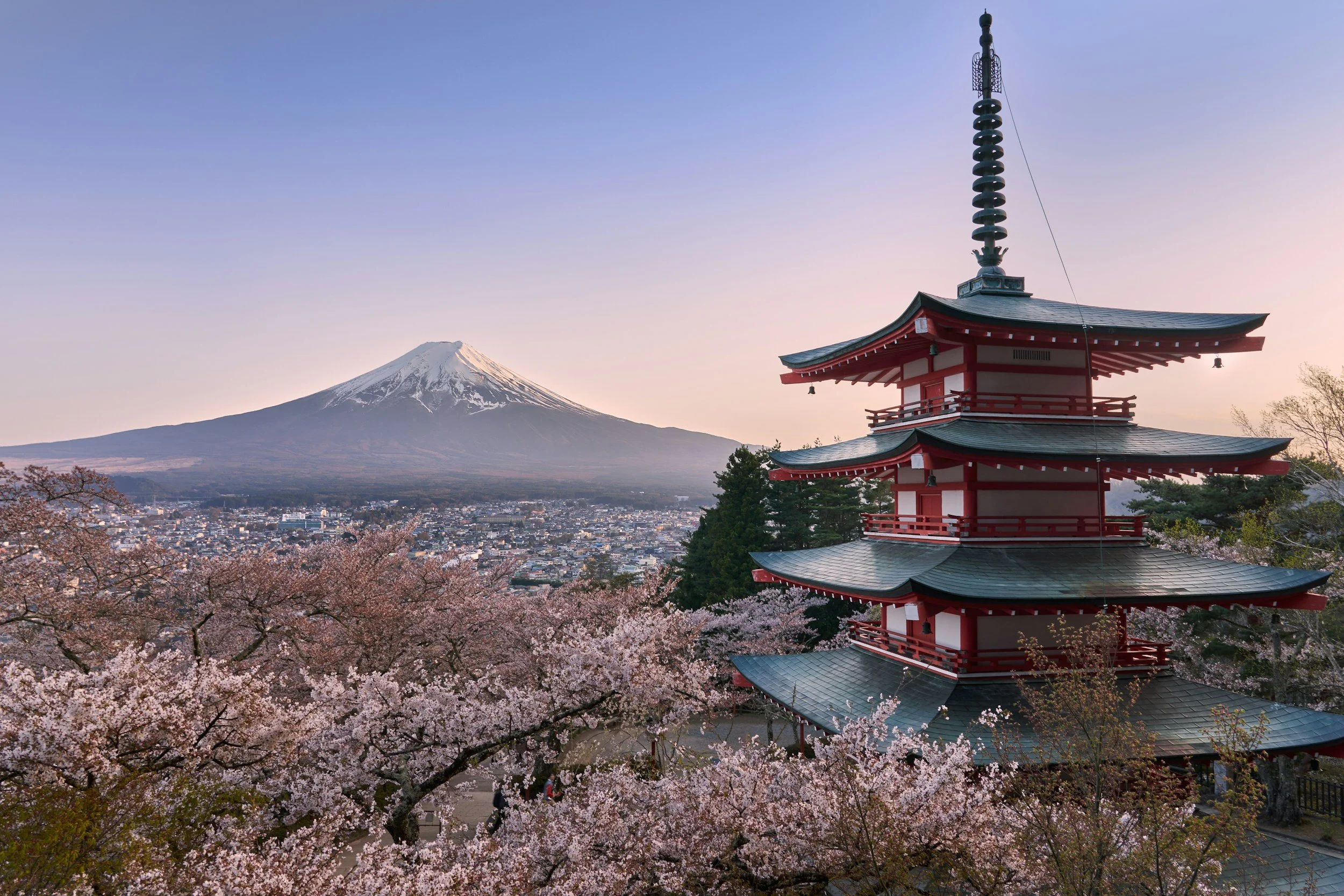
More than a decade ago, when university friend was obsessing over Japan, I didn't get it. I never thought I'd have the chance to visit somewhere I assumed was well out of reach for someone like me, and so it stayed as someone else's interest, not mine.
Then in autumn of 2015, my dad's company trip changed that, one he pulled some strings to bring the family along on. It was my first look at the country, and it was enough to make me want more than a single trip.
That "more" came in pieces, not in one long return visit. Working on cruise ships gave me brief stops at Japanese ports, hours at a time rather than days. None of it ever felt like enough.
These days I even watch anime and J-dramas, something my younger self wouldn't have believed. Somewhere between those early visits and now, I went from not caring to understanding why I love Japan.
So why travel to Japan? These are some of the reasons I think Japan is worth visiting.
The best reasons to travel to Japan
1. Rich history and cultural heritage
Few countries have preserved their past as visibly, or as carefully, as Japan. Centuries-old shrines and temples still sit at the centre of daily life, not roped off as relics but visited, maintained, and woven into the rhythm of the week.
Kyoto is where this history is easiest to find. Once the imperial capital for over a thousand years, it holds the highest concentration of temples and shrines, and a handful of geisha districts still hold onto rituals that have barely changed in generations. Nearby Nara is home to some of Japan's oldest surviving wooden structures and temples that predate Kyoto itself.
Elsewhere, castles rise over cities that grew up around them, several dating back hundreds of years and still standing much as they did when they were built. Many of these sites, along with entire historic districts, now carry UNESCO World Heritage status.
2. Modern cities unlike anywhere else
If Kyoto and Nara show Japan's past, Tokyo and Osaka show where the country has taken it since. These are cities built at a different speed, where neon skylines and towering architecture make it clear you're somewhere that never quite settled for finished.
Shibuya is often the shorthand for this energy, all screens and crossings and constant movement, with shopping streets stacked vertically as often as horizontally, layering cafes, boutiques, and arcades on top of one another.
What makes it distinct is how ordinary the technology feels. Vending machines sit on nearly every corner, convenience stores double as small, efficient department stores, and robotics show up in cafes and hotels as a matter of course, not a novelty.
3. Spectacular scenery in every season
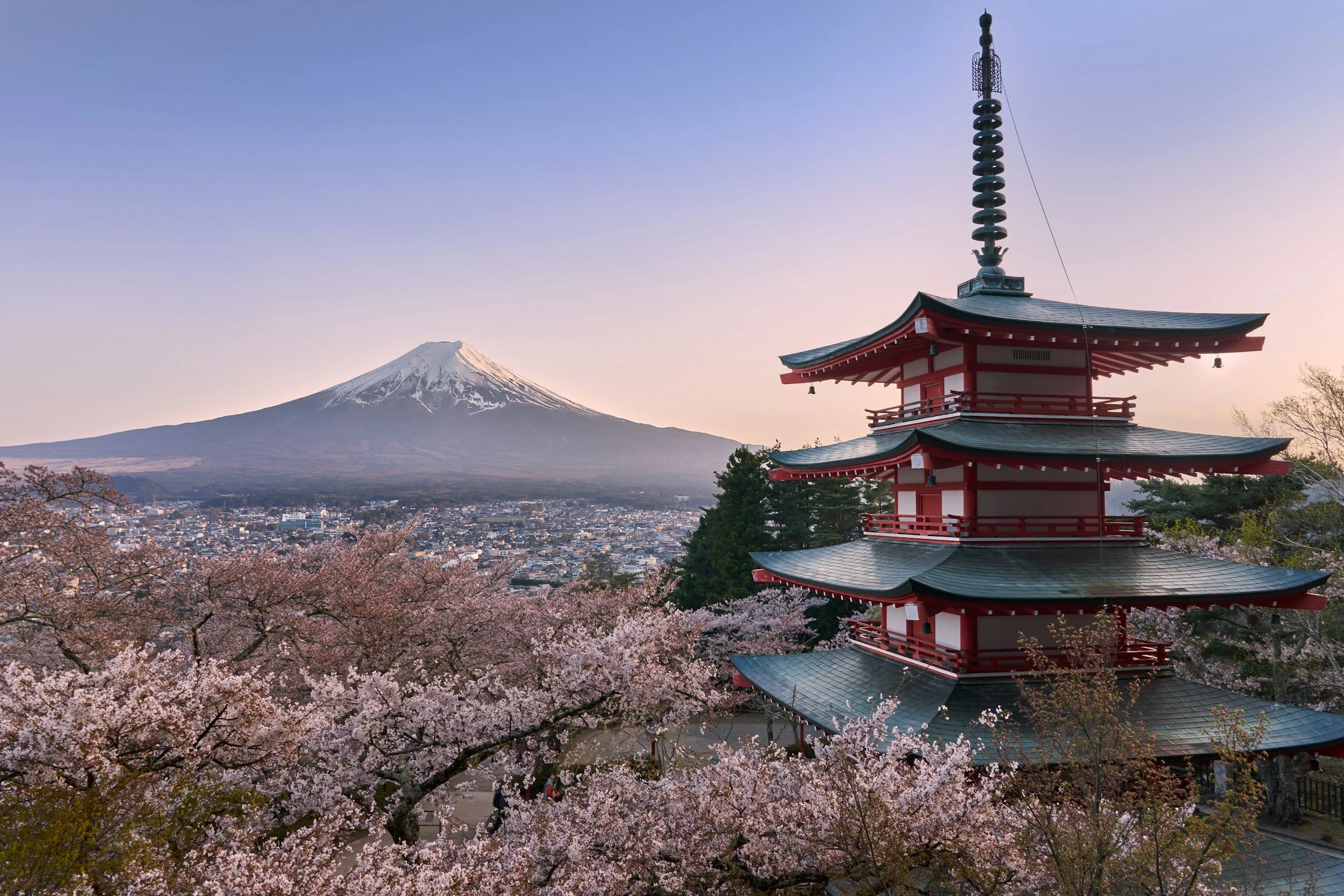
Japan doesn't just experience four seasons, it turns them into a reason to travel. Spring is famous for its cherry blossoms, which bloom across the country for a few fleeting weeks each year.
Summer brings lush mountains, colourful flower fields and lively festivals, before autumn paints temples, gardens and forests in vibrant shades of red and gold. Winter blankets much of northern Japan in snow, drawing skiers, snowboarders and hot spring lovers alike.
Outside of the seasons, the geography stands on its own. Mount Fuji is visible on clear days, the Japanese Alps offer hiking beyond the cities, and the coastlines range from rugged cliffs to quiet fishing towns.
4. Traditional hot spring towns
Japan's hot springs, known as onsen, are found across the country, from mountain towns to coastal areas. Many are fed by natural volcanic activity, and bathing in them is a long-standing tradition, valued for its restorative properties.
Onsen towns often pair with ryokan, traditional Japanese inns that typically include tatami-mat rooms, futon bedding, and multi-course meals served as part of the stay. Some ryokan have their own private onsen, while others are built around a shared communal bath.
5. A culture of respect, cleanliness and hospitality
Cleanliness in Japan goes beyond streets without litter. Public toilets are consistently well-maintained, shops keep their displays neatly arranged, and even a simple purchase is often wrapped with visible care.
This same attention to detail shows up in how people interact. Queues form in an orderly way, trains stay quiet even when crowded, and customer service tends to be thorough. Punctuality is treated as a basic form of respect, for other people's time as much as your own.
It's not something reserved for special occasions either. It's just how things are done, day to day, and it's hard not to notice.
6. Food worth travelling for
Japan's food scene goes well beyond sushi. Ramen changes dramatically from one region to another, yakitori turns something as simple as grilled chicken into its own speciality, and wagyu beef is often treated as an experience worth planning a meal around.
Travelling between prefectures also means discovering different local specialities, with recipes and ingredients that reflect regional traditions.
Some of the most memorable meals come from unexpected places. Convenience store food is reliably good rather than a last resort, and department store food halls turn grocery shopping into a tasting tour.
Even a quick meal often feels thoughtfully prepared, making everyday dining one of the pleasures of travelling in Japan.
7. One of the world's best public transport systems
Japan's public transport is often ranked among the most efficient in the world, and the Shinkansen is usually the first example people reach for. Bullet trains connect major cities in a fraction of the time it would take by car, with punctuality so precise that a delay of even a minute is treated as notable.
That same reliability carries through the metro systems in Tokyo and Osaka, where lines run frequently, stations are clearly signposted, and luggage lockers make it easy to move around without hauling bags all day.
Even the journey itself adds to the experience. Ekiben, the regional boxed meals sold at stations, turn a train ride into a small food experience of its own, often reflecting whatever the local area is known for.
8. One of the safest countries to travel
Japan is consistently ranked among the safest countries in the world, ranking first globally for safety from violent crime and transportation safety. It's common to hear about bags left on cafe tables, unlocked bikes, wallets turning up at lost and found rather than disappearing.
This makes it especially reassuring for solo travellers, families with young children, and first-time visitors still getting used to navigating somewhere unfamiliar.
Public spaces, including train platforms, generally have a reputation for safety, though like anywhere, it's worth staying aware.
9. World-famous pop culture
For many fans of Japanese pop culture, Japan is less a destination and more a pilgrimage. Studio Ghibli, Pokémon, Nintendo, and decades of manga all trace back here, and that legacy is visible everywhere you go.
Akihabara in Tokyo is perhaps the best-known example, a district built almost entirely around anime, manga and gaming culture, with multi-floor stores, arcades and themed cafes packed into a few city blocks.
Karaoke rooms, another Japanese export turned global habit, are easy to find in nearly every city. They're a reminder that Japan's cultural influence extends well beyond anime and gaming. Even for travellers who wouldn't call themselves fans (myself included), it's hard to spend time in Japan without noticing just how much of today's global pop culture has its roots here.
Even this list only tells part of the story. A first trip to Japan might include Tokyo and Kyoto and feel complete, but that still leaves the mountains, the coastlines, the quieter towns and even the season you happened to miss. Every visit seems to reveal how much wasn't included in the last one.
Perhaps that's why so many people visit Japan again and again. One trip rarely covers it all, and there's usually a reason to plan the next one before the last one's even over.
Similar Posts









Curious about dark tourism in Malaysia? These places with a dark history reveal stories of war, disaster, imprisonment, displacement, and more.