12 places in Malaysia that feel like Wes Anderson scenes in real life
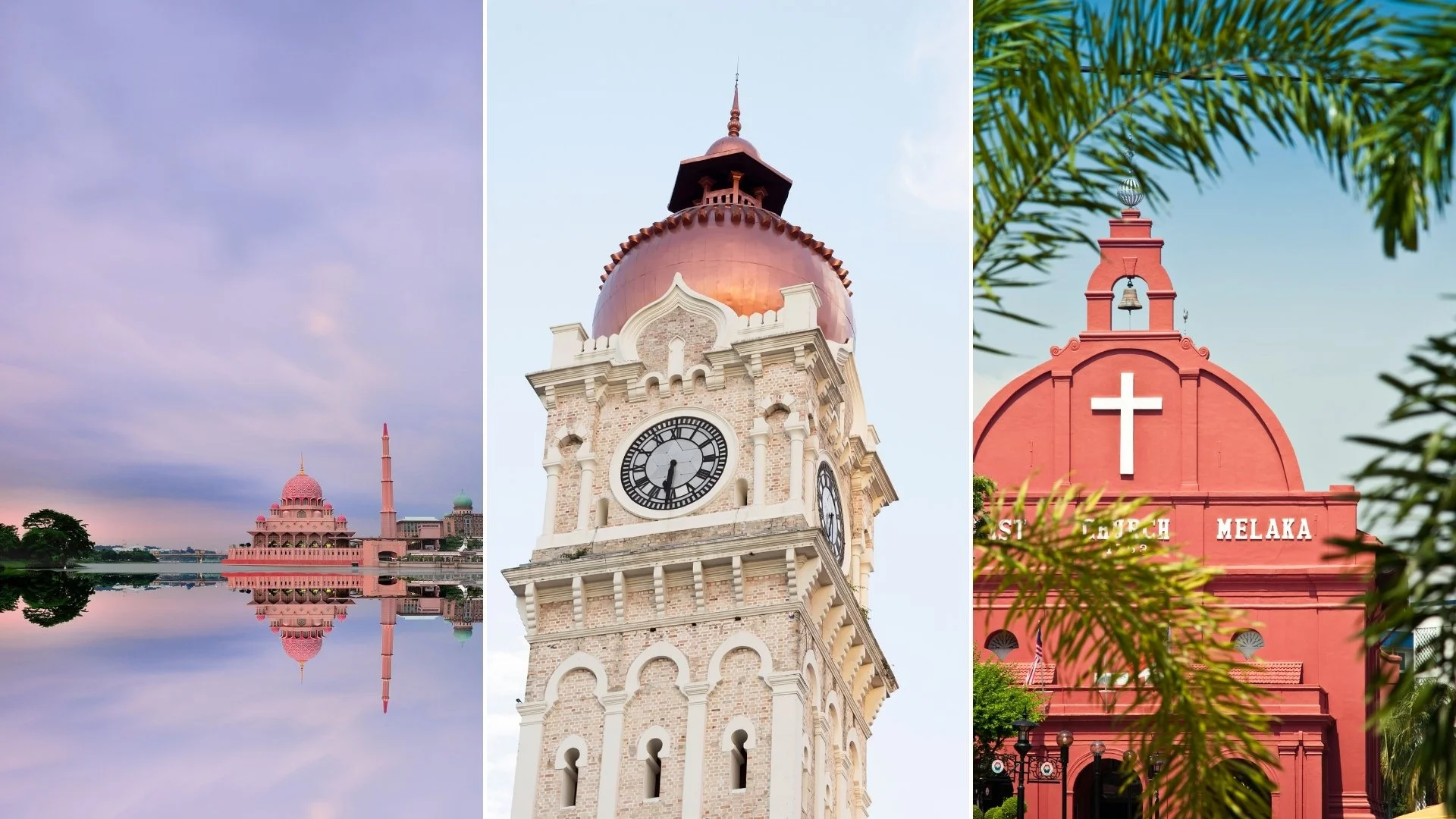
Photos from left: AzriSuratmin, TanjalaGica, ferrantraite
I didn’t know what Accidentally Wes Anderson was at first. I came across the Instagram account and the book, and assumed it was some kind of travel project with very good photography.
Then I wondered if it had something to do with Wes Anderson himself. It didn’t – but it did make me curious enough to browse through his film catalogue, and to start my first Anderson film: The Grand Budapest Hotel.
So what is Wes Anderson’s style, really? Meticulous symmetry, vibrant pastel colour palettes, and a distinctly theatrical way of staging a scene. Even from the covers alone, the style is unmistakable.
Malaysia doesn’t look like his films in the obvious way. But if you pay attention to the facades, the repetition, and the way colours come together, you start to notice it.
Here are the places in Malaysia that feel accidentally Wes Anderson.
Places in Malaysia that feel accidentally Wes Anderson
Masjid Putra, Putrajaya
Visit Masjid Putra for… a rose-pink mosque built entirely from granite, with a reflection pool that doubles it perfectly.
If you love the Wes Anderson aesthetic, Putra Mosque is the kind of place it was made for. Built almost entirely from blush-pink granite, every dome, minaret, and colonnade is the same deliberate dusty rose – a palette that feels less like architecture and more like art direction.
Come at sunset (if not sunrise). As the sky shifts to orange and purple, the mosque appears to float on its own reflection in the man-made lake below, and the pink granite deepens into something almost dreamlike.
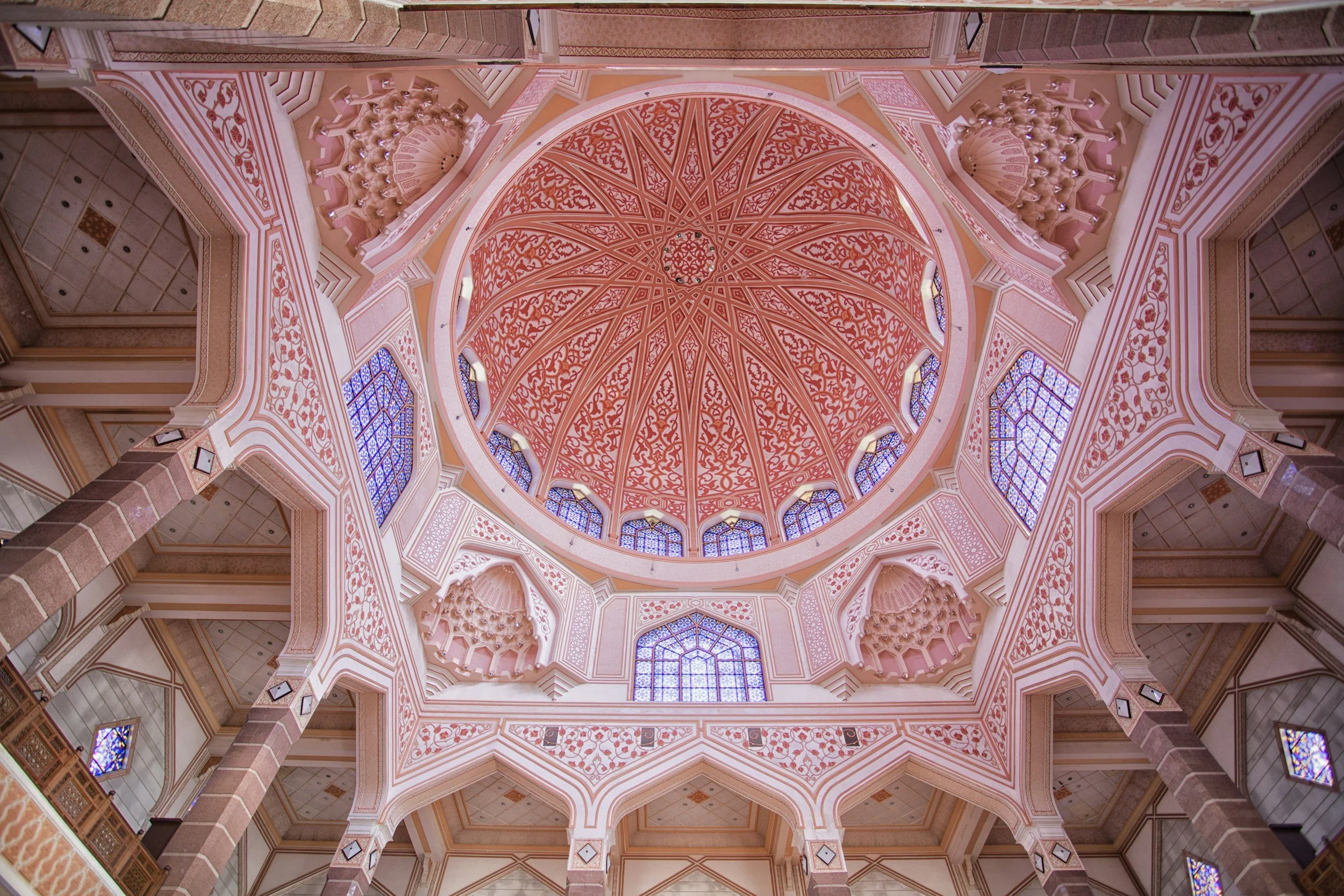
Photo by sippakorn yamkasikorn
Istana Kehakiman, Putrajaya
Visit Istana Kehakiman for… a grand courthouse defined by monumental symmetry that makes for very compelling architecture. This one has been spotted by the AWA community.
The Palace of Justice stretches along a clean central axis, with repeating arched colonnades, a central dome, and smaller flanking domes arranged in diagrammatic precision.
The pale, beige-toned stone, blue-sky backdrop, and clipped green forecourts create a flat, orderly composition that reads like a background painted for a slow tracking shot.
Sultan Abdul Samad Building, Kuala Lumpur
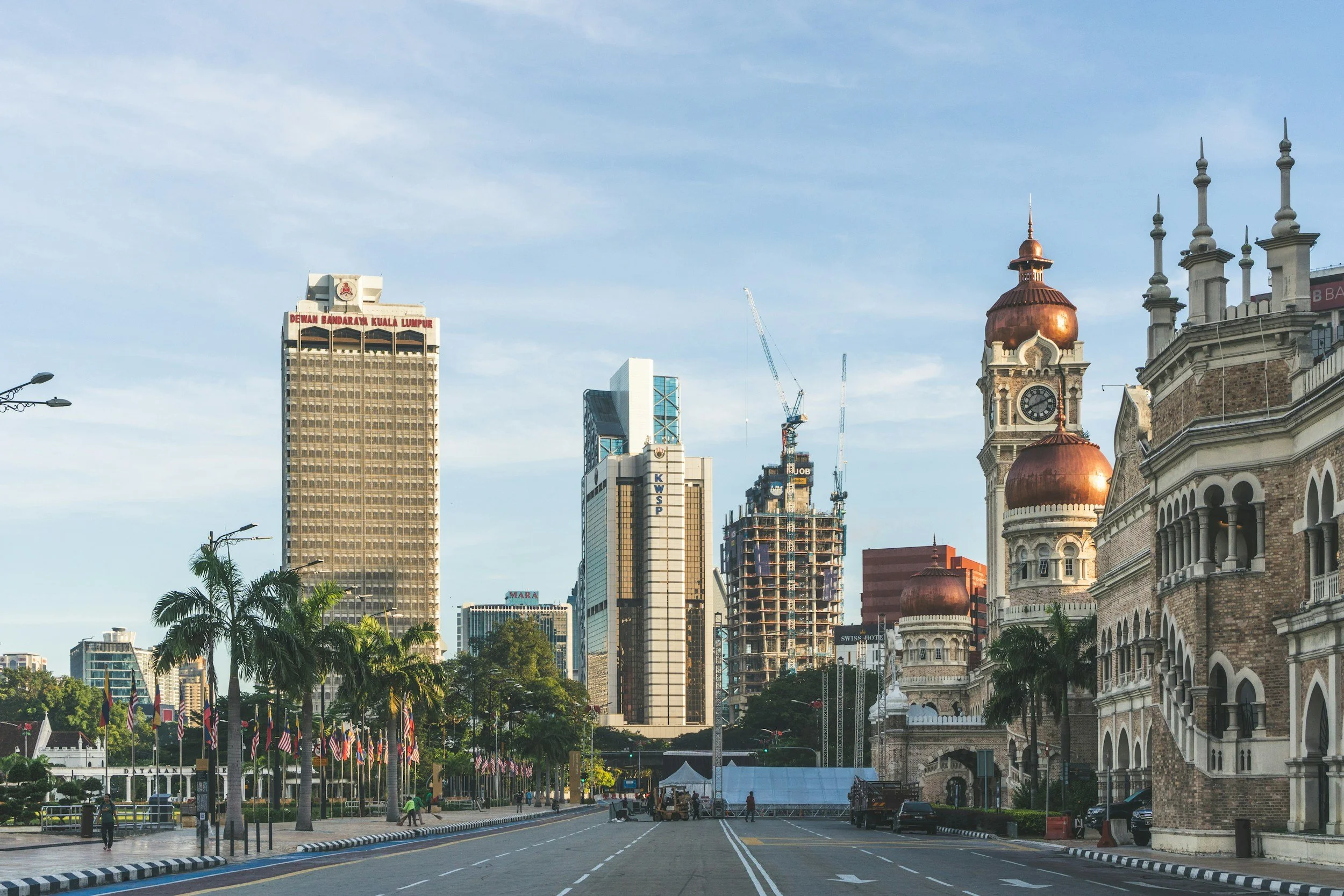
Visit Sultan Abdul Samad Building for… a copper-domed colonial landmark that has anchored Kuala Lumpur's skyline since 1897, and still looks like the establishing shot of something cinematic.
If Istana Kehakiman is Putrajaya's crisp civic centrepiece, Sultan Abdul Samad Building is its older, warmer predecessor in Kuala Lumpur. The building that once housed Malaysia's highest courts before they relocated to Putrajaya.
The architectural style blends Moorish, Indo-Saracenic, and Neo-Mughal influences – red brick, white plaster arches, and copper domes. The 40-metre clock tower anchors the facade with a central-axis precision that makes you instinctively reach for a camera.
Recently restored and reopened as of February 2026, it is perhaps a little more polished than it once was, but the bones are extraordinary.
Central Market, Kuala Lumpur
Visit Central Market for… a pastel-blue Art Deco facade that feels almost too neatly framed against the chaos inside.
Built in 1888 as a wet market and later reimagined in its current Art Deco form, Central Market stands out not for grandeur, but for clarity. The light blue and white exterior is simple, almost flat in its composition.
The interior is lively and worth exploring, but the AWA moment is entirely in the facade. Stand back, centre yourself, and take it in as a whole.
Ipoh Railway Station, Perak
Visit Ipoh Railway Station for… a whitewashed British colonial station that is still very much in use – which makes its unhurried, composed beauty feel all the more unlikely.
The station's facade stretches across a long symmetrical frontage of long colonnades, domed towers, and repeated arches, making you slow down instinctively.
Consider timing your visit between ETS train arrivals, before the cars fill the forecourt. Stand far enough back, and the whole place opens up in front of you like a scene from The Darjeeling Limited that nobody filmed yet.
Stadthuys and Dutch Square, Melaka
Visit Stadthuys and Dutch Square for… a colonial town centre painted entirely in one persistent, unapologetic shade of terracotta red.
At the heart of Dutch Square, the Stadthuys was built by the Dutch in the 1650s – believed to be the oldest surviving Dutch building in the East – and was originally white. It was the British who later painted it red, and in doing so created one of Malaysia's most cinematic streetscapes.
Today the deep terracotta runs across everything: the Stadthuys, the clock tower, the fountain, the church nearby. Even the worn stone paving, in its grey and reddish tones, adds to the overall warmth.
That commitment to a single, saturated palette is what gives the square its almost staged quality. Less a historical site, more a scene that assembled itself around one very persistent colour.
George Town shophouses, Penang
Visit George Town for… heritage shophouse streets in faded pastels, where the colours and proportions line up just right, as if the whole town were composed for a lateral tracking shot straight out of The French Dispatch.
One Instagrammer describes it as what it might look like if Wes Anderson designed a city. Walking through streets like Lebuh Armenian or Lebuh Cannon, it’s easy to see why.
Rows of shophouses unfold in soft greens, dusty pinks, sun-washed yellows, and peeling blues – consistent enough to feel curated, varied enough to feel alive. It is the structural repetition that holds your attention: Peranakan tiles underfoot, carved wooden doors and shuttered windows, the five-foot way columns running in sequence down the street.
Among these streets, you’ll also find places like Pinang Peranakan Mansion, where the green‑hued facade – and the intricate details inside – extend the storybook palette.
Cheong Fatt Tze Mansion, Penang
Visit Cheong Fatt Tze Mansion for… a cobalt-blue mansion that feels like stepping back in time, with interiors that are precise down to the smallest detail.
Built in the late 19th century by a Hakka immigrant, who became one of the most powerful merchant tycoons in Southeast Asia, the Blue Mansion is Penang's most cinematic address – and it has the credits to prove it, having appeared in Crazy Rich Asians.
The deep indigo exterior is striking enough from the street, but the interior is where the real magic is: a central courtyard framed by ornate wooden louvres, geometric floor tiles, carved timber screens, and corridors that lead somewhere interesting at every turn.
It's also a boutique hotel – so if the aesthetic is the whole point, you can sleep inside it too. If there is a more Wes Anderson way to spend a night in Penang, it has not yet been discovered.
Lebuh Pantai Fire and Rescue Station, Penang
Visit Lebuh Pantai Fire and Recue Station for… a colonial fire station that looks like the backdrop of a stop-motion scene. It’s one of the few Malaysian entries in the AWA collection.
Located along one of George Town's most storied streets, the facade is perfectly centred, with tall arched windows, clean lines, and classic lettering all sitting exactly where they should.
The colour palette does most of the work. The white structure lined with vibrant red against the blue Penang sky feels both nostalgic and graphic.
Bandar Agacia, Kampar
Visit Bandar Agacia for… a forgotten pastel mini-town in the middle of Perak. It’s the most “AWA” kind of place, with the emphasis on accidental.
Inspired by Disneyland's Main Street, Bandar Agacia was built as a themed commercial township with candy-coloured shopfronts and streets named Disney Avenue. Many of the shops have since closed, the cafes gone still, the streets emptied out.
What remains is something more interesting than what was planned. The soft pinks, mint greens, warm yellows are still there, but the quiet has given the whole place a wistful, slightly surreal quality. It feels uncannily close to Asteroid City – except without the desert.
The AWA community found it. It is not hard to see why.
The Très Hotel, Kuala Lumpur
Visit The Très Hotel for… a boutique hotel that doesn't just reference the Wes Anderson aesthetic. It commits to it, from the blush pink facade to the vintage props in the lobby.
The exterior is a pastel colour block of blush pink, mint green, and mustard yellow, making it one of the closest things in Malaysia to The Grand Budapest Hotel kind of visual world.
Inside, the Peu Peu Cafe is also open to non-guests, so you don't need to book a room to experience the retro quirkiness – vintage props, considered furniture, and the feeling that every corner was styled rather than simply furnished.
The Chow Kit – an Ormond Hotel, Kuala Lumpur
Visit The Chow Kit for… a posh hotel in the heart of old KL that Time Out described as having decor “straight out of a Wes Anderson film”, blending nostalgic details with modern luxury.
At The Chow Kit, the aesthetic leans into a moody, slightly theatrical elegance, with dramatic lighting, polished wood, and rich, deep tones. The careful layering of patterns and antiques still feels aligned with a Wes Anderson-style interior, even if it’s more restrained than playful.
If you want more places with a specific aesthetic, you might also like…
Colonial-era places in Malaysia with timeless architectural charm
My list of places with a cottagecore vibe
Similar Posts








Curious about dark tourism in Malaysia? These places with a dark history reveal stories of war, disaster, imprisonment, displacement, and more.