10 of the happiest countries on earth (and what makes them feel good)
Sometimes all I want is to be reminded that life, somewhere in the world, is being lived really well.
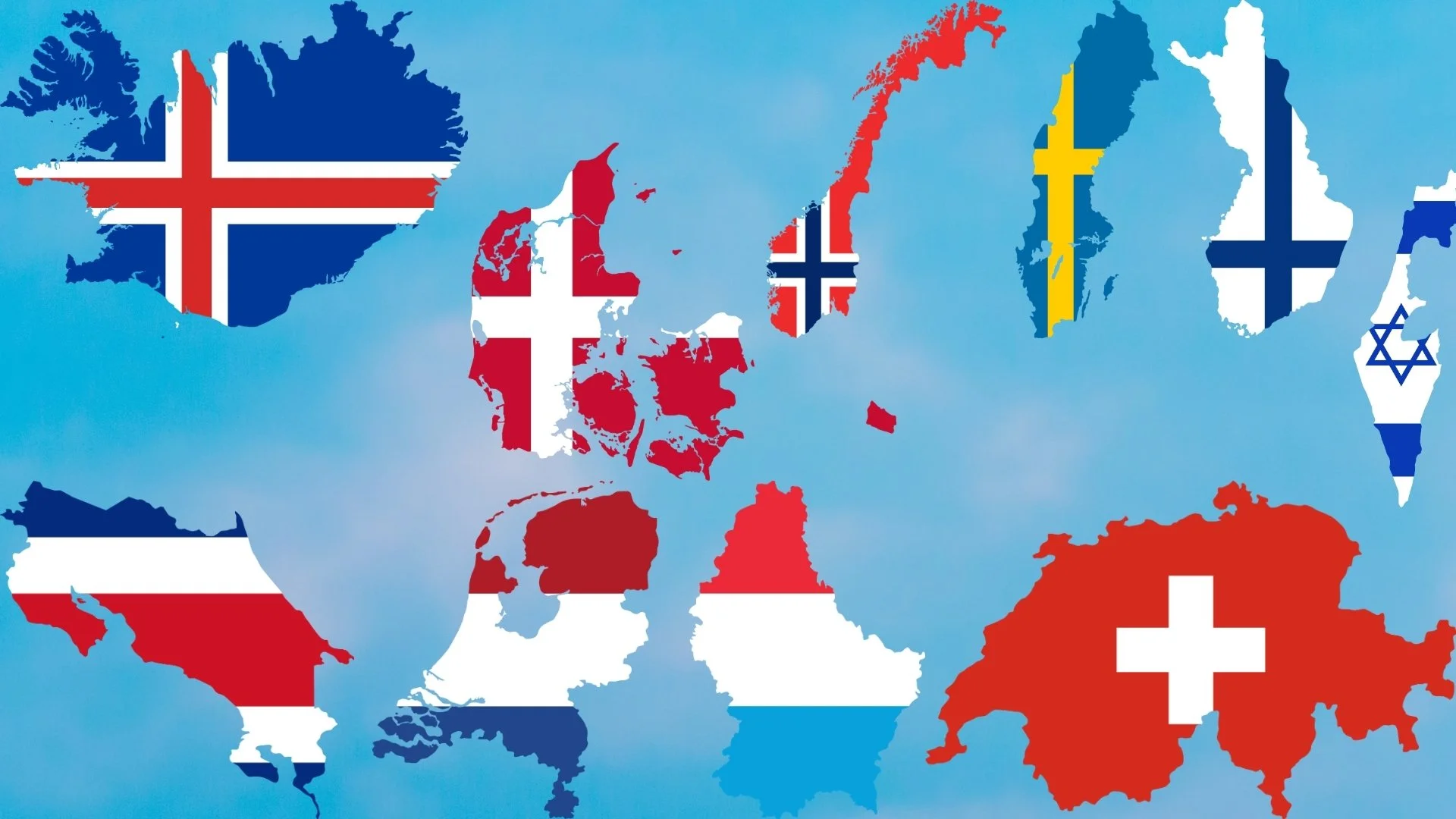
The places in this list are some of the happiest countries on earth in 2025 – and the most feel-good places to explore or draw inspiration from. Expect slower days, stronger communities, and the everyday joy most of us are still looking for.
These are the most feel-good countries to explore or draw inspiration from.
Scroll through the list, find the feel-good philosophy that speaks to you, and see what you might bring home...
The happiest countries on earth – and the feel-good secrets
Finland
Look to Finland for… a country that takes happiness seriously, and has the nine consecutive years at the top of the World Happiness Report to show for it.
Finland is forests, lakes, and long winters that the Finns have never tried to escape. Instead they built a culture around facing them, and thriving anyway.
The word for this is sisu: a quiet, courageous resilience that finishes what it starts, shows up in cold lakes and smoky saunas, and finds something grounding in the effort.
Few places make the case for feel-good living quite as quietly as Finland.
Iceland
Look to Iceland for… a sparsely populated island nation that turned a harsh landscape into one of the warmest, most tight-knit cultures on earth.
Iceland sits on volcanoes. Earthquakes are common, eruptions are not unusual, and the landscape shifts in ways most countries never experience. Living this close to nature's extremes seems to have drawn Icelanders closer together.
With fewer than 400,000 people on a remote island, looking out for one another came naturally, and that instinct has never really left.
The landscape shaped something else too. Innsæi – meaning "the sea within", "to see within", and "to see from the inside out" – speaks to intuition, self-awareness, and an inner compass of a people who have always had to make peace with uncertainty. You cannot control a volcano. You learn to adapt instead.
Denmark
Look to Denmark for… a culture that has turned the art of being cosy into a philosophy for living well.
Denmark is bike rides through tidy cities, long dinners with friends, and dark winters made bearable through warmth and togetherness.
Rather than resisting the colder months, the Danes built a culture around making them enjoyable – and hygge is at the heart of it. Less about buying things and more about atmosphere: warm lighting, shared meals, wool blankets, fresh bread, and time spent with people you actually like.
Denmark consistently ranks among the happiest countries on earth. Hygge may be the simplest explanation why.
Costa Rica
Look to Costa Rica for… a country that has found happiness not in wealth or ambition, but in the simple, sun-soaked business of being alive.
In Costa Rica, pura vida is more than a saying. It is a greeting, a goodbye, an expression of gratitude, and a reminder that life does not need to be perfect to be good.
That attitude seems to flow naturally from the country itself: rainforests alive with wildlife, warm beaches, outdoor living, and a culture that places more value on community, family, and wellbeing than relentless productivity.
A region in Costa Rica is also one of the world's Blue Zones, where people routinely live past 90, and these qualities appear to be exactly why.
Sweden
Look to Sweden for… a more balanced way of living, where happiness is found not in excess but in having just enough.
At the heart of Swedish life is lagom, a word with no direct English translation but roughly meaning "not too much, not too little… just right". The saying lagom är bäst sums it up: enough is as good as a feast.
You can feel this in small daily habits: leaving work at a reasonable hour, keeping homes simple and uncluttered, and pausing mid-morning for fika, coffee and a treat enjoyed slowly, often in the company of others.
Sweden makes a compelling case that a good life doesn't require very much at all. Just the right amount.
Norway
Look to Norway for… a country that has built its happiness around one simple idea: go outside.
Friluftsliv, literally “open-air living”, is the Norwegian commitment to spending time in nature not as a hobby or a health trend, but as an ordinary part of daily life. Norwegians hike in the rain, ski in the dark, and swim in cold fjords without much fuss.
But Norway is not all bracing mountain air and cold water. There is koselig too, that same Nordic instinct for candlelight, warm drinks, and good company when the world outside is dark and cold.
Underlying it all is Janteloven, the social code that no one person is better than another. It has shaped a culture that values humility and equality over competition – and in that, perhaps, lies some of Norway's secret.
Netherlands
Look to the Netherlands for… a culture that has mastered the art of enjoying life without overcomplicating it.
At the heart of Dutch life is gezelligheid, a concept that loosely translates to warmth, togetherness, and the comfort of being somewhere you belong. It is the feeling of a candlelit cafe on a rainy afternoon, a long dinner with good company, or a neighbourhood that feels lived in.
The Dutch work reasonable hours, cycle almost everywhere, and have built cities designed more for people than for cars. Leisure is not treated as laziness, but as part of a life well lived.
Then there is niksen, the Dutch idea of doing nothing in particular, without guilt. In a world obsessed with productivity, that is a more radical idea than it sounds.
Israel
Look to Israel for… a reminder that happiness has less to do with easy circumstances and more to do with the people around you and the meaning you find in your days.
Israel is not an obvious entry on a list of feel-good places. It faces real conflict and real uncertainty, and yet it has ranked in the top ten of the World Happiness Report for five consecutive years running.
Much of this comes down to strong family bonds, tight community ties, and the shared Friday night table, which functions in its own way like a weekly act of gratitude. There is even a phrase Israelis reach for in difficult moments, yehiyeh beseder (“it will be okay”), less a prediction and more a posture towards life.
The lesson Israel offers is perhaps the most transferable of all: happiness does not always come from comfort.
Luxembourg
Look to Luxembourg for… a country that has figured out how to turn prosperity into a comfortable life that feels shared.
Tucked between larger European neighbours, Luxembourg feels calm, clean, and surprisingly close to nature despite its wealth and modernity. Free public transport, short commutes, and cities where half the space is parks and green areas make the difference between a country that is rich on paper and one that actually feels good to live in.
Work-life balance here is not an aspiration – it is simply how things are done.
Switzerland
Look to Switzerland for… happiness hiding in plain sight – in the mountains, the gardens, and the unhurried pace of daily life.
Life here feels ordered without being rigid. Trains run on time, cities are clean and efficient, and everyday systems work so smoothly that they almost fade into the background, leaving more room for life to simply happen.
Beyond the structure, there is always nature nearby. The Swiss cycle past turquoise lakes, hike alpine trails, and live in cities where green space is built in. It is a quiet, unshowy happiness – and perhaps one of the most sustainable on this list.
Similar Posts








Curious about dark tourism in Malaysia? These places with a dark history reveal stories of war, disaster, imprisonment, displacement, and more.