18 ways to use a bandana when you travel
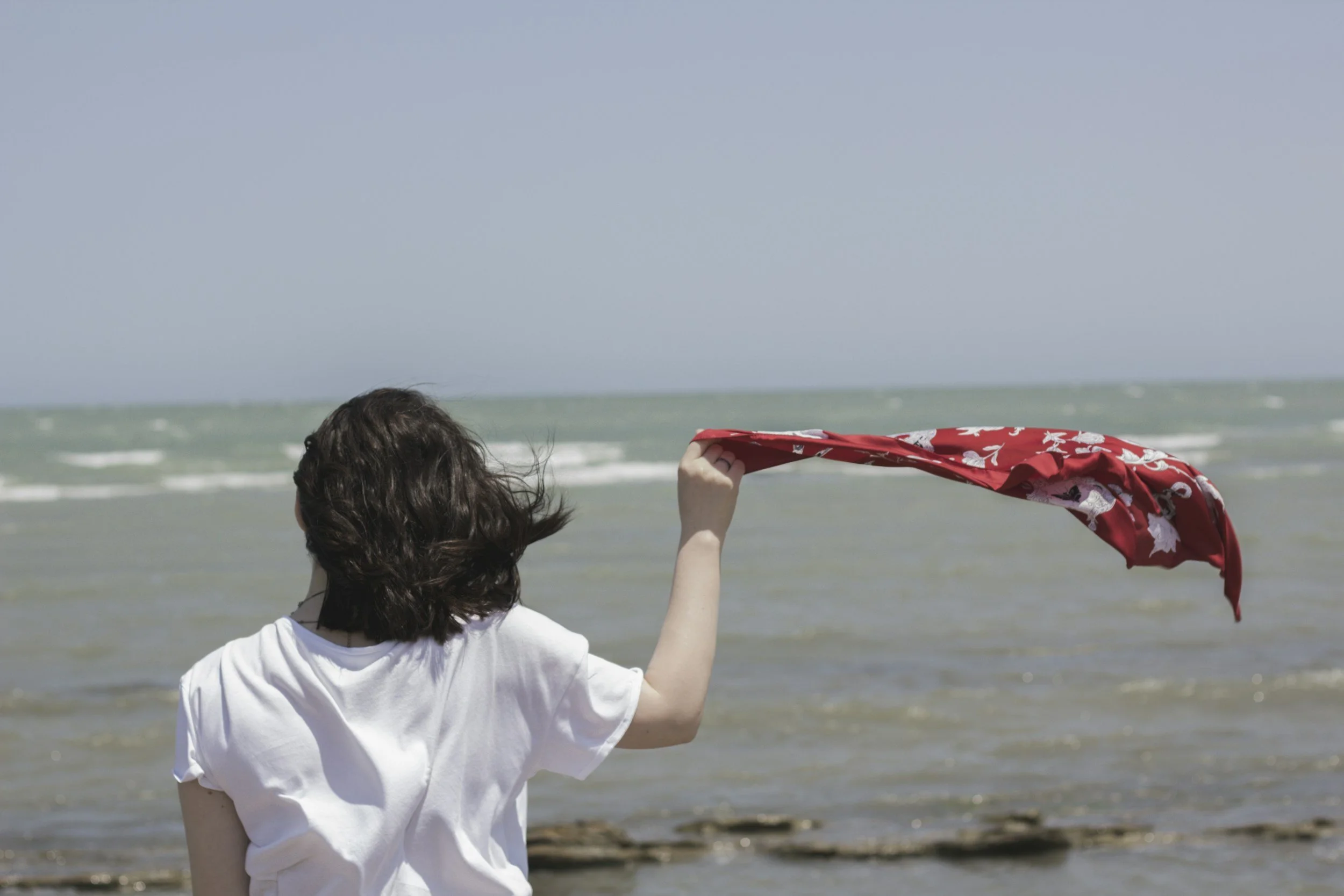
Photo by Leman
As a young adult, I was fascinated by the bandana – the rock-star image, the classic red paisley print, all the ways it seemed to get styled in the magazines and music videos I grew up on. It looked like an accessory that could do anything, always a little rebellious. I found one at Daiso, the classic red print, and bought it on the spot.
I packed that bandana on nearly every trip after that. And then, almost every time, it stayed folded in my bag.
The few times I did wear it, I was a bit precious about keeping it clean in public, otherwise I'd sweat through it. And travelling among friends who dressed quite plainly – no accessories, nothing extra – wearing a bandana felt like standing out for no reason.
So it came along for the ride, again and again, and rarely made it onto my head – which, if you think about it, is a fairly unusual thing to keep packing.
Years on, I've started paying more attention to what a bandana can do. While researching ways to use bandanas, I came across uses I wasn't comfortable adopting myself, and others that felt like a small, perfect example of minimalist packing: one square of fabric solving five different problems.
This is a list of what a bandana is used for, built around travel and a little hiking: the uses I've actually tried, the ones I plan to start using, and the ones I think are worth knowing even if you never need them.
Turns out there's a lot more to it than I ever gave it credit for.
Practical and creative uses for bandanas when travelling
Sweat absorption. Wear it across the forehead as a sweatband, wrap it around the wrist, or tuck it into a hat as a liner.
Hair control. Fold it into a strip and wear it like a hair band to push hair back off the face. Useful for washing up, or eating something messy without it getting in the way.
Hair binding. Tie it as a makeshift hair tie for a ponytail, bun, or braid when the actual one has, inevitably, vanished.
Head/hair covering. Wear it as a headscarf on a bad hair day, or to cover your head at religious sites where a hat won't do.
Sun protection. Drape it over the head, hair, or neck to block UV and stop the back of your neck from burning, especially somewhere without shade or when you're out of suncream.
Cooling. Soak it in cold water and tie it around the neck, neckerchief-style, for evaporative cooling.
Cold weather protection. Fold it into a band, wrap it around the forehead and over the ears, and tie the ends at the back of the head – or wear it around the neck instead. A poor substitute for a proper buff, but it's the one already in your bag.
Face cover. Pull it up over the nose and mouth against dust, wind, sand, or smoke. Useful on a scooter, a dusty trail, or hiking near an active volcano.
Rain protection. Not built for real rain, but place it over the head and it'll buy you a few minutes in light drizzle before you find better cover.
Eye mask. Fold it lengthwise and tie it loosely around the head to block light for a nap en route or during the day.
Towel. Use it to wipe hands or face after a wash or a rinse.
Bag organiser. Use a furoshiki-style wrap to bundle bulky items like a rolled jacket or spare clothes into a compact package. Lay the bandana flat, place the folded clothes near one corner, roll tightly towards the opposite corner, then tie the side ends together over the roll.
Reusable bag. One of several ways to do this: fold it into a triangle. Tie a knot on each side, about a third to halfway up from the bottom corner. Turn it inside out so the seams sit on the inside, then tie the two loose corner tips together in a small double knot to form a handle. Ready to carry a water bottle, a food container, or a couple of books. (Furoshiki wrapping has other variations worth looking up if you want to take this further.)
Signal flag. Wave it to get a companion's attention, or use it for visibility if you need to be seen or found. Pick a brightly coloured or high-contrast bandana; red tends to stand out well against greenery.
Cushioning. Fold it and wrap it around a bag strap that's decided to dig into your shoulder on hour four of a hike.
Identifier or marker. Tie it to a bag zip, strap, or tent so you can spot your own gear faster among a row of identical ones.
Securing your hat. Tie it around the crown as a hat band on an ocean voyage or anywhere strong wind threatens to take it.
Fashion accessory. The obvious one. Tie it around the head, neck, wrist, or a bag strap purely for a pop of colour or styling.
To take this further, novelty bandanas double as board games, maps, or survival cheat sheets (this one, an affiliate link, features a star chart design). Bandanas can also be useful in an emergency, perhaps as a sling or tourniquet. That's its own rabbit hole, and not one I'll pretend expertise in. For day hikes and general travel, the eighteen above cover what you'll reach for.
Similar Posts






If you've ever wondered how to use a bandana beyond the obvious, here are some practical and creative uses, from minimalist packing to hiking essentials.